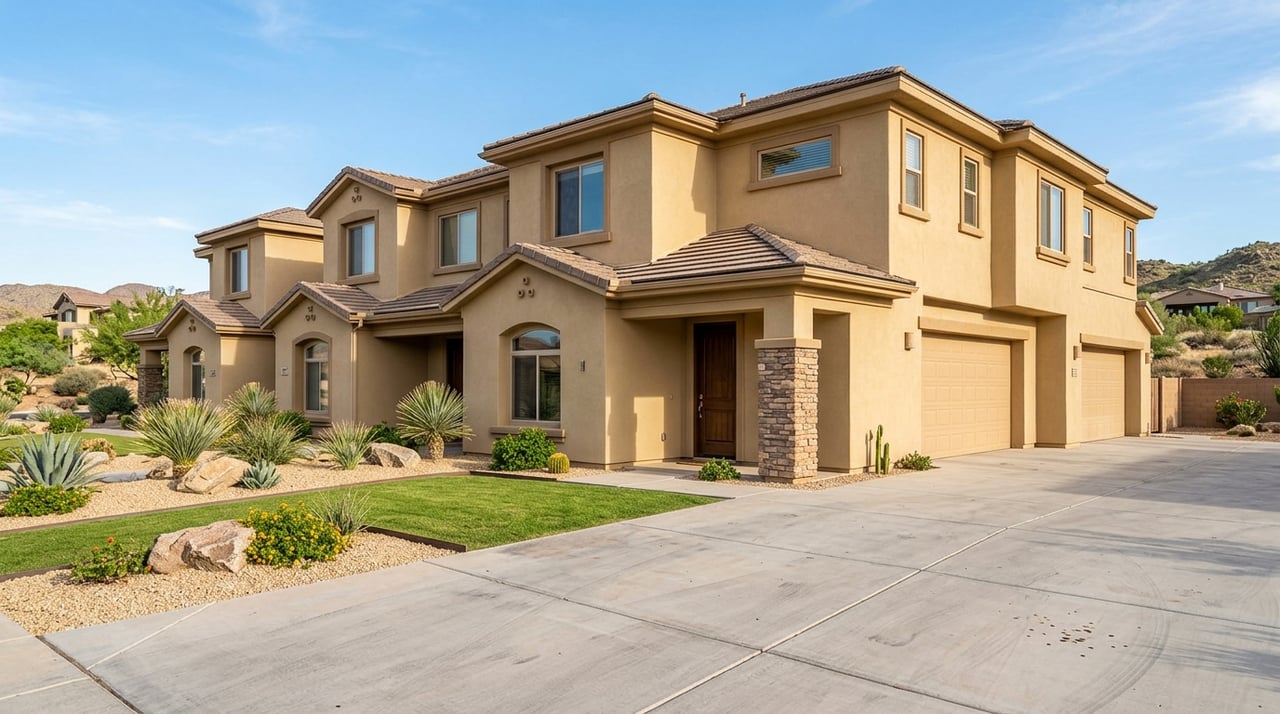
Your Guide to Chandler AZ Townhomes and Condos
May 14, 2026
May 14, 2026
Wondering whether a condo or townhome in Chandler is the right fit for your next move? You are not alone. For many buyers, attached homes can offer a smart path to homeownership, a lower-maintenance lifestyle, and access to convenient Chandler locations, but the details matter more than many people expect. This guide will help you understand how Chandler’s condo and townhome options differ, where they tend to cluster, what HOA fees may cover, and what to watch before you make an offer. Let’s dive in.
Chandler has a large enough attached-home market to appeal to several types of buyers, including first-time buyers, downsizers, and investors. In a current Redfin market snapshot, Chandler had about 103 townhouses for sale with a median listing price near $380,000.
That variety is important because attached homes in Chandler are not all the same. Some are fee-simple townhomes in planned communities, while others are condominiums where ownership also involves shared common areas and building exteriors. If you are shopping in Chandler, understanding that distinction early can save you time and help you compare homes more accurately.
With a condominium, you typically own the interior space of your unit while sharing ownership of common areas and exterior elements with the rest of the community. That structure usually comes with mandatory monthly dues that support common-area upkeep and exterior responsibilities.
In many condo-style communities, those dues may also help cover items like water, sewer, trash, insurance, and recreational amenities. That can make the day-to-day experience feel simpler, but it also means the association’s finances and rules play a bigger role in your purchase.
A townhome can look similar from the street, but the ownership structure is often different. Some Chandler townhomes are fee-simple homes in planned communities, which means the legal setup may be closer to a single-family purchase, even though walls or amenities are shared.
That difference matters because the marketing label does not always tell the full story. Before you fall in love with a home, you will want to confirm whether it is legally a condo or part of a planned community, since that can affect financing, disclosures, insurance responsibilities, and HOA coverage.
One of the biggest reasons buyers consider attached homes is lower-maintenance living. Exterior repairs, common-area upkeep, and some utilities or amenities may be handled by the association, which can make ownership feel more manageable.
Location is another major draw. Chandler’s freeway network includes I-10, US-60, Loop 101, and Loop 202, which helps explain why attached-home communities often show up in commuter-friendly areas. If you want easier access to major employment hubs, shopping, or downtown destinations, attached housing can line up well with that goal.
Current listing patterns and city materials point to four practical pockets for condos and townhomes in Chandler. Each one offers a different lifestyle feel, commute pattern, and amenity mix.
Downtown Chandler is a compact, walkable district of about half a square mile centered on Arizona Avenue and located less than half a mile from Loop 202. The city describes it as a regional destination for shopping, dining, living, culture, and the arts, with 1,571 residential units and more supply in the pipeline.
If you want a more urban feel, this area may stand out. Near-downtown attached homes often appeal to buyers who value walkability, nearby restaurants and entertainment, and a shorter trip to the downtown core.
For many buyers, this is one of the most commuter-oriented pockets in Chandler. Listings around Ray, Dobson, Price, and Warner often attract buyers who want quick access to Chandler Fashion Center, Loop 101, Loop 202, and the Price Corridor.
That matters because the Price Corridor is Chandler’s biggest job cluster. According to the city, the area around Loop 101 and Loop 202 includes about 42,060 jobs and 749 businesses, with major employers such as Intel, Wells Fargo, Bank of America, Northrop Grumman, and Microchip Technology.
If amenities are high on your list, south Chandler often deserves a closer look. Current listings in Ocotillo and Fulton Ranch commonly highlight features like gated entries, pools, spas, pickleball, walking trails, golf access, lakes, and clubhouse-style amenities.
These communities can be especially attractive if you want a lock-and-leave lifestyle with more built-in extras. The tradeoff is that HOA dues in these areas often run higher than in older central Chandler communities.
Southeast Chandler also offers newer attached-home options, especially around communities near Gilbert Road in 85249 and 85286. Listings in this pocket often emphasize community pools, spa or fitness amenities, dog parks, gated access, and services like water, sewer, and trash.
For buyers who want newer construction and added amenity support, this area can be appealing. It is often a practical fit for people who want convenience and a more streamlined ownership experience.
HOA dues can shape your monthly budget just as much as your mortgage payment, so it helps to know what you are paying for. In Chandler condo and townhome communities, dues often support exterior maintenance, common-area care, and sometimes utilities or amenities.
Current listing examples show a wide range. Some lower-fee examples near Arizona Avenue and Heather Glen list monthly dues from $155 to $203, with coverage that may include roof repair, insurance, grounds maintenance, trash, water, sewer, and pool access.
In newer or more amenity-rich communities, dues trend higher. Current 85226 examples show HOA dues around $382 to $396, while some Ocotillo and Fulton Ranch examples range from $486 to $629 with features such as pools and garage spaces, along with broader area amenities like golf, pickleball, heated pools, spas, and clubhouses.
The key takeaway is simple: there is no one Chandler HOA average that tells the whole story. Dues can vary widely based on the age of the community, insurance structure, exterior coverage, and amenity package.
It is easy to focus on purchase price first, especially if you are trying to stay within budget. But with condos and townhomes, the smarter comparison is the full monthly cost.
As you evaluate a home, look at the mortgage payment, property taxes, insurance needs, and HOA dues together. A lower-priced home with high dues may not feel more affordable than a slightly higher-priced home with lower monthly obligations.
Condo financing is often more document-heavy than many single-family purchases and some townhome transactions. Lenders may need to confirm that the project meets eligibility requirements and may review the community’s finances, insurance, physical condition, litigation status, and other project-level risks.
That means your loan approval may depend not only on your finances, but also on the association itself. If you are buying a condo, it is smart to ask early whether the project is considered warrantable and whether there are any known issues that could affect financing.
HUD notes that FHA can insure condo loans in FHA-approved projects or in projects that meet Single-Unit Approval requirements. That can matter for first-time buyers or anyone using financing programs with stricter project standards.
If you are considering a condo in Chandler, ask your lender and your agent to review the project status as early as possible. That simple step can help you avoid delays later in the process.
Arizona adds another layer of due diligence, and that is a good thing for buyers. For condominiums, Arizona Revised Statutes section 33-1260 requires disclosure of items such as bylaws, the declaration, assessment amounts, insurance coverage, reserve totals, litigation, the operating budget, the annual financial report, and any reserve study.
Similar disclosure rules apply to planned communities under section 33-1806. Arizona law also allows the association to charge up to an aggregate $400 fee for the disclosure package, plus limited rush and update fees.
Before you write an offer on a Chandler condo or townhome, ask questions that go beyond finishes and floor plans. The right answers can tell you whether a community fits your budget and comfort level.
Consider asking about:
These questions can help you compare two similar-looking homes that may operate very differently behind the scenes.
Attached homes can make ownership feel simpler. You may spend less time worrying about exterior repairs, yard work, or common-area upkeep, and in some communities, some utilities and amenities are included through the HOA.
They can also match Chandler’s geography well. If you want to be near downtown, major freeway access, or the Price Corridor employment hub, condos and townhomes can open up location options that fit your lifestyle and commute.
The main tradeoffs are less individual control and the added cost of monthly dues. You will also need to follow community rules and accept that association decisions can affect your ownership experience.
With condos in particular, financing and association health deserve extra attention. Reserve strength, litigation, insurance, and the possibility of special assessments can all affect both affordability and peace of mind.
First-time buyers often like attached homes because they can provide an accessible entry point into the Chandler market. The key is to compare the full monthly payment, not just the list price.
Downsizers are often drawn to downtown Chandler, Ocotillo, and other amenity-rich communities where the lock-and-leave lifestyle may justify higher dues. Buyers who relocate or travel often may also appreciate communities that handle more of the exterior upkeep.
Investors may be interested as well, but they should verify rental friendliness, project eligibility, and HOA financial strength before making an offer. In any attached-home purchase, the community matters almost as much as the unit itself.
The best condo or townhome for you depends on what you want most. If walkability matters, start with downtown Chandler. If commuting is the priority, central-west Chandler near the Price Corridor may deserve the first look. If amenities and a more polished lock-and-leave setup are driving your search, south Chandler and southeast Chandler may rise to the top.
As you compare options, focus on four things: location, ownership structure, HOA coverage, and total monthly cost. When you line those up with your goals, it becomes much easier to spot the right fit and avoid expensive surprises.
If you are weighing condos versus townhomes in Chandler and want local guidance that keeps the details clear, Brittany Arnett can help you compare neighborhoods, understand the fine print, and move forward with confidence.
Stay up to date on the latest real estate trends.
Whether you’re buying your first home or selling your current one, Brittany Arnett delivers hands-on support, strong negotiation, and local market knowledge to help you win in Mesa real estate.
BRITTANY ARNETT
2233 S Springwood Blvd Mesa AZ 85209