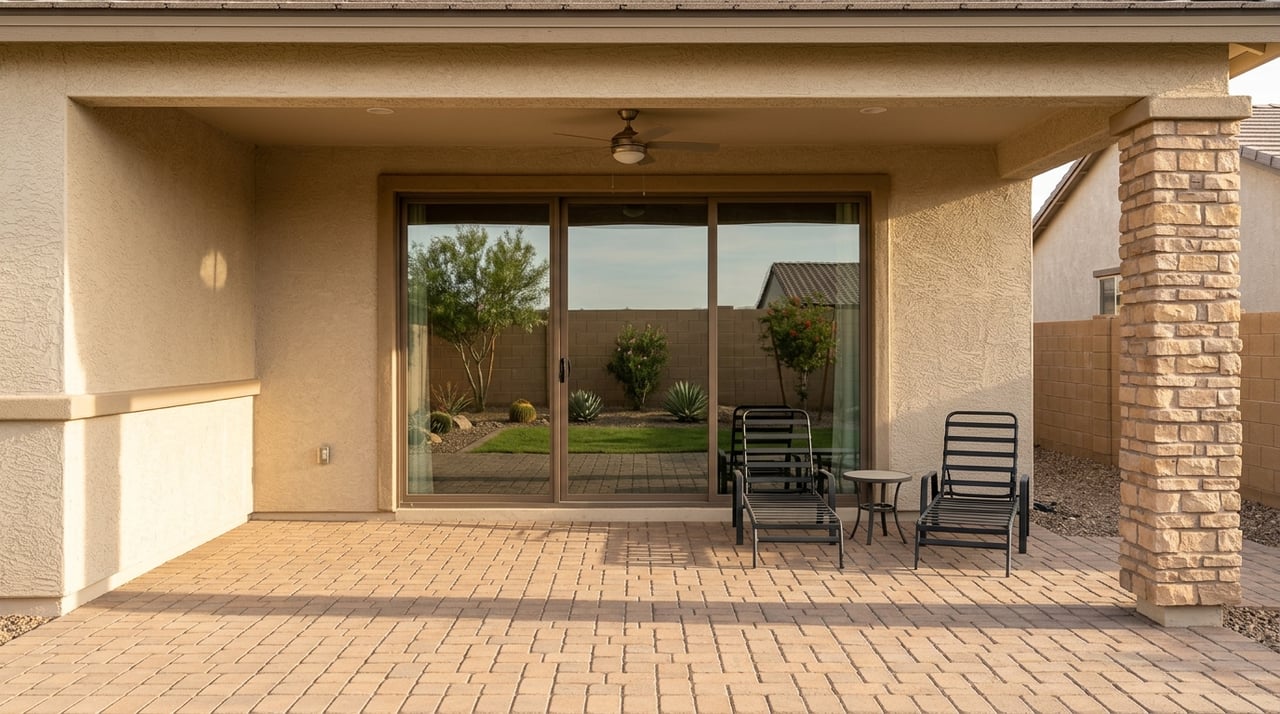
Relocating to Queen Creek AZ from Out of State: Your Plan
April 23, 2026
April 23, 2026
Moving to Queen Creek from another state can feel simple at first glance, until you realize one address can come with very different town limits, service providers, and school boundaries than the next. If you are trying to plan a long-distance move without missing an important detail, you need more than listing alerts. You need a clear, local game plan that helps you verify the right property, avoid surprises, and move with confidence. Let’s dive in.
Queen Creek is not always as straightforward as it looks on a home search site. According to the Town of Queen Creek, the area spans both Maricopa and Pinal counties, and a Queen Creek mailing address does not always mean the home is inside the incorporated town limits.
That matters because the exact parcel can affect municipal services, utilities, school boundaries, and even who provides public safety coverage. The town also notes that some homes with ZIP codes like 85212, 85140, and 85143 may use a Queen Creek mailing address without being inside the town boundary.
If you are relocating from out of state, this is one of the most important things to understand early. In Queen Creek, the city name on the listing is only the starting point. The parcel details tell the real story.
Before you tour homes, get your financing lined up. The Consumer Financial Protection Bureau recommends getting preapproved before you seriously shop, because it helps you understand your price range and shows sellers you are a serious buyer.
For an out-of-state move, preapproval also helps you plan for more than just the purchase price. You may also need to budget for closing costs, movers, temporary housing, travel, and a reserve for repairs or updates after move-in.
A clear budget makes every other decision easier. It helps you narrow your target areas, compare monthly payment options, and avoid wasting time on homes that do not fit your full relocation picture.
When you are buying from another state, your search should be based on facts, not just photos. In Queen Creek, that means checking each home against local details that may not be obvious in the listing.
Your checklist should include:
The town specifically advises residents and buyers to verify whether they live in Queen Creek through its address and service area resources. That is especially helpful when similar homes have similar mailing addresses but different service setups.
This step can save you from major surprises. The Town of Queen Creek explains that homes outside incorporated limits may rely on county services, private water providers, county sheriff coverage, and private fire protection, even if they still have a Queen Creek mailing address.
The town also says its water service area is not the same as the town boundary. So even if a home looks like it is "in Queen Creek," you should still verify the exact parcel before assuming it qualifies for town water, sewer, trash, or other municipal services.
This is where having one local point of contact matters. A parcel-level review can help you compare homes accurately and avoid making decisions based on assumptions.
Queen Creek offers a growing community with practical access for travelers and commuters. The town estimates a 2024 population of 83,700 and says it is about 10 minutes from Mesa Gateway Airport and 45 minutes from Sky Harbor, according to the Town of Queen Creek overview.
If you expect frequent work travel, family visits, or a phased move, those airport connections can make relocation easier. They can also help if you plan to fly in for inspections, final walkthroughs, or move-in coordination.
As you compare neighborhoods and homes, think about how you will actually live day to day. Commute time, lot size, HOA expectations, and utility setup often matter just as much as square footage.
If school access is part of your move, confirm boundaries before you write an offer. Queen Creek Unified School District provides a boundary map and open-enrollment information, and the district notes that students attending through open enrollment outside their home boundaries are responsible for their own transportation.
That detail matters for long-distance buyers who are trying to build a realistic routine before they arrive. It is also important to know that the town states annexation does not change school district boundaries, so a property being annexed or located in a growth area does not automatically change school assignment.
The safest approach is simple. Verify the exact parcel, review the applicable school boundary, and understand transportation responsibilities before moving forward.
Out-of-state buyers need more than polished photos and a short video clip. A strong remote process includes live video walkthroughs, a clear look at the street and nearby homes, and a practical review of storage, mechanical systems, and major condition items.
Because Queen Creek mailing addresses, town limits, and service areas do not always line up, remote tours should be paired with local verification. A home can look perfect online but still require extra fact-checking on utilities, service providers, or school boundaries.
A smart remote showing should help you answer questions like:
Once a seller accepts your offer, your focus shifts from shopping to due diligence. The CFPB says buyers should provide lender documents, schedule a home inspection, and shop for homeowners insurance, title insurance, and other closing services.
This is also when timing starts to matter more. Your lender must provide the Closing Disclosure at least three business days before closing, giving you time to compare final numbers to your earlier loan estimate and ask questions before you sign.
If you are relocating from another state, keep all deadlines in one place. A shared timeline for inspection, lender conditions, insurance, wire instructions, and utility setup can make the process feel much more manageable.
The home inspection is one of your biggest protection points in the transaction. The CFPB recommends hiring an independent inspector who is accountable to you and can identify major issues early enough for you to decide how to proceed.
It is also important to remember that the inspection and appraisal are not the same thing. The inspection is for your information about the home’s condition, while the appraisal is generally required by the lender as part of the loan process.
For out-of-state buyers, it often helps to review inspection findings carefully and ask follow-up questions right away. That can be especially useful when you are not local and cannot revisit the home easily.
Arizona does allow remote notarization. The Arizona Secretary of State says remote notarization uses audio-visual technology and an online platform, and the notary must be physically located in Arizona.
That can make life easier if you would rather not fly back just to sign final documents. Still, remote closing depends on the procedures of your lender and title company, so it is smart to ask early what can be signed electronically and what, if anything, requires extra coordination.
The CFPB also explains that the settlement agent handles the legal transfer of title and ownership, while an escrow officer may handle the money exchange depending on the state. Knowing your exact closing contacts ahead of time can reduce stress.
Wire fraud is a real concern in any transaction, and distance can make buyers more vulnerable if they feel rushed. The CFPB warns buyers to be alert for mortgage closing scams and to confirm wire instructions directly with the closing agent before sending money.
Do not rely only on an emailed instruction sheet. Call a verified number for the title or closing office and confirm every detail before you transfer funds.
This step may feel small, but it is one of the most important parts of a remote closing plan.
Once closing is near, start setting up your move-in essentials. For homes inside incorporated town limits, the Town of Queen Creek Utility Services Department handles water and sewer or wastewater, and the town requires at least two business days' notice to connect water service.
That means you should not wait until moving day to start service. New service can be requested online, and the town says same-day requests may be possible for a fee.
Just remember that not every Queen Creek mailing address receives town utilities. The exact parcel still needs to be verified, especially if the home is outside the incorporated limits.
If your new home is inside town limits, trash and recycling may be part of the local utility system. The Town of Queen Creek says its Environmental Services Division provides curbside trash and recycling to nearly 25,000 homes, and the current standard monthly fee is $16.22 for weekly trash, weekly recycling, and one monthly bulk-trash collection up to six cubic yards.
That monthly bulk pickup can be especially helpful right after a move. According to the town’s bulk trash collection guidelines, pickup must be scheduled by noon the business day before collection, and items must be curbside by 6 a.m.
If you expect a lot of boxes, packing materials, or move-related cleanup, it is worth planning that service before you are fully unpacked.
After your move, do not forget the state paperwork. The Arizona Department of Transportation says new residents must visit MVD for an Arizona driver license or ID, and a vehicle brought from another state must be registered as soon as you become an Arizona resident.
ADOT also notes that some Phoenix-metro vehicles require emissions testing before registration. If you are moving with multiple vehicles, build that into your first couple of weeks so it does not become a last-minute scramble.
When your closing date is firm, move school enrollment up your to-do list. QCUSD open enrollment information notes that families outside district boundaries may apply for open enrollment, but transportation remains the family’s responsibility and service is limited to the student’s home-school boundaries.
For many relocating households, timing matters here just as much as paperwork. The earlier you confirm school logistics, the easier it is to plan transportation, before-school care, and your weekly routine.
Most out-of-state moves are smoother when you have one reliable person coordinating the details on the ground. In Queen Creek, that matters even more because town limits, county lines, school boundaries, and service areas can change from one address to the next.
A local guide can help you verify the exact parcel, coordinate tours and inspections, communicate with the title company, and keep your move-in timeline organized. That kind of hands-on support is often what turns a stressful relocation into a well-managed transition.
If you are planning a move to Queen Creek and want a clear, step-by-step approach, Brittany Arnett can help you navigate the local details and keep your relocation on track. Let’s find your next home.
Stay up to date on the latest real estate trends.
Whether you’re buying your first home or selling your current one, Brittany Arnett delivers hands-on support, strong negotiation, and local market knowledge to help you win in Mesa real estate.
BRITTANY ARNETT
2233 S Springwood Blvd Mesa AZ 85209